





The 2026 Ultimate Guide to Off-Grid Solar Panel Kits: Battery and Inverter Included [Complete Setup]
- What is an Off-Grid Solar Panel Kit With Battery and Inverter?
- Quick Summary & Key Takeaways
- Anatomy of a Complete Off-Grid Solar Setup
- Sizing Your System: How to Calculate Power Needs
- 2026+ Future Trends and Pricing Forecasts
- Common Mistakes & Expert Tips for DIY Installation
- Industry Leading Solutions: A Congsin Case Study
- Conclusion
- How much does a complete off-grid solar kit cost?
- Can a 400W solar kit run a refrigerator?
- What size inverter do I need for an off-grid cabin?
- How long do lithium solar batteries last off-grid?
- Are plug-and-play solar kits better than DIY setups?
- Do off-grid solar panels work on cloudy days?
- How many solar panels are needed to go completely off-grid?
- What is the difference between MPPT and PWM charge controllers?
What is an Off-Grid Solar Panel Kit With Battery and Inverter?
An off-grid solar panel kit with battery and inverter is a self-sustaining energy system designed to operate independently of the local utility grid by generating, storing, and converting solar power for everyday electrical use.
To achieve true energy independence, these comprehensive bundles harness sunlight through highly efficient photovoltaic panels, store the generated direct current (DC) power in deep-cycle battery banks, and seamlessly convert it into usable household alternating current (AC) electricity via a specialized inverter. High-quality complete off grid solar systems are engineered to provide reliable, autonomous electricity that is absolutely essential for remote cabins, off-grid RV living, and emergency residential home backup. By relying on a unified system, homeowners are shielded from grid outages and rising utility costs, ensuring a continuous and robust power supply in virtually any environment.
Quick Summary & Key Takeaways
The most crucial takeaway is that pre-packaged kits eliminate component compatibility issues by perfectly matching solar panels, high-capacity batteries, and efficient inverters into one seamless powerhouse.
Navigating the world of off-grid solar requires a firm understanding of how individual components interact. By selecting a bundled system, you bypass the steep learning curve and technical risks associated with piecing together mismatched parts.
- Eliminated Compatibility Issues: Complete kits eliminate electrical bottlenecks by bundling precisely matched panels, batteries, charge controllers, and inverters. This ensures maximum energy yield and system stability.
- The New Standard in Storage: Lithium Iron Phosphate (LiFePO4) batteries are now the gold standard for off-grid energy storage due to their exceptional longevity, enhanced safety profile, and massive depth of discharge capabilities.
- Critical Sizing Metrics: Accurate load calculation is absolutely critical; sizing your inverter and battery bank incorrectly can lead to catastrophic system failure, damaged appliances, or unexpected blackouts.
Anatomy of a Complete Off-Grid Solar Setup
The anatomy of a complete off-grid setup consists of four core pillars: photovoltaic panels to capture sunlight, a deep-cycle battery bank for storage, an inverter for AC conversion, and a charge controller to regulate voltage.
Understanding the specific role of each component is vital for building a resilient power architecture that will last for decades.
- Solar Panels: The foundation of your energy generation. Modern systems often debate between standard Monocrystalline panels and advanced Bifacial designs. Monocrystalline panels boast exceptional efficiency rates (frequently exceeding 22%), while bifacial panels can capture reflected ambient light from the ground, boosting overall yield by up to 15% in optimal conditions.
- The Battery Bank: This acts as the heart of your off-grid system. When evaluating storage, Lithium (LFP) drastically outperforms traditional Lead-Acid and AGM batteries. LFP chemistry offers a considerably longer cycle life, supporting more than 3,000 to 9,000 cycles without significant capacity degradation, as reported by Wikipedia. They also permit a 100% depth of discharge without damaging the cells.
- The Inverter: You must utilize a pure sine wave inverter off grid setup if you plan to power modern appliances. Unlike modified sine wave inverters that produce a choppy, blocky electrical wave, pure sine wave models replicate utility-grade electricity. This is a strict necessity for sensitive electronics like laptops, medical CPAP machines, and modern variable-speed refrigerators.
- Charge Controllers: The gateway between your panels and your batteries. While basic systems might use PWM (Pulse Width Modulation), an MPPT charge controller solar bundle is mandatory for larger kits. MPPT (Maximum Power Point Tracking) technology dynamically adjusts the voltage and amperage, increasing power harvesting efficiency by up to 30%.
Sizing Your System: How to Calculate Power Needs
Properly sizing your solar system requires a precise audit of your daily watt-hour consumption to ensure your battery bank and inverter can support your lifestyle without unexpected power drops.
Failing to accurately calculate your load will result in a system that either endlessly trips its breakers or leaves you in the dark after a cloudy day. Follow this structured approach to engineer a flawless setup:
- Auditing your daily watt-hour (Wh) consumption: Begin by listing every appliance you plan to power. Multiply the wattage of each appliance by the hours it runs daily. For instance, a 100W television running for 4 hours consumes 400Wh. Add all appliances together to find your total daily baseline.
- Sizing the battery bank: Your storage must cover your daily consumption while accounting for "days of autonomy"—the number of days your system can run without sun. When sizing for maximum autonomy, integrating advanced battery energy storage solutions bess allows you to scale up seamlessly and survive long, overcast winter weeks.
- Choosing an inverter: Your inverter must handle the simultaneous "continuous wattage" of all running appliances, plus the "surge wattage" (the momentary spike in power needed to start electric motors, like well pumps or AC units).
- Determining the right solar array size: Divide your total daily Wh consumption by the average "peak sun hours" in your specific geographic location. This dictates the absolute minimum wattage your solar array must be able to generate.
2026+ Future Trends and Pricing Forecasts
The future of off-grid solar in 2026 is defined by the integration of AI-driven smart load management, rapidly decreasing lithium costs, and the early-stage commercialization of solid-state battery technology.
As global demand for decentralized energy grows, technological advancements are driving down hardware costs while dramatically increasing efficiency and lifespan. Communities and individual homeowners are moving toward microgrid infrastructures to guarantee continuous operation during severe utility disruptions, as highlighted by the U.S. Department of Energy.
- Predictive Cost Analysis: Moving into 2026, the cost per kilowatt-hour for comprehensive off-grid kits is expected to drop by another 15%, primarily driven by massive scaling in global LFP battery manufacturing and streamlined logistics.
- AI-Driven Smart Management: Next-generation plug-and-play kits are integrating Artificial Intelligence (AI) to intuitively manage loads. These smart controllers learn your consumption habits and automatically prioritize critical circuits (like refrigeration) during low-sunlight periods.
- Solid-State Battery Integration: While LFP remains the undisputed current champion, premium solar bundles are beginning to transition toward early-stage solid-state battery integrations, which promise completely fire-proof chemistry and double the energy density in half the physical footprint.
Common Mistakes & Expert Tips for DIY Installation
The most common DIY solar mistakes involve improper panel wiring configurations and under-calculating winter energy yields, both of which can lead to system failure and accelerated battery degradation.
When you decide to install DIY solar panel kits with lithium batteries, precision is your best friend. A single miscalculation in wiring gauge or panel arrangement can severely throttle your power output or create a dangerous fire hazard.

- Expert Tip: Always wire your solar panels in the correct series, parallel, or series-parallel configuration to perfectly match the maximum voltage and amperage limits of your MPPT charge controller. Exceeding the voltage limit will instantly fry the controller.
- Common Mistake: Countless beginners fail to account for the shifting angle of the sun. Underestimating winter energy yields is a classic error. To counteract shorter days and lower sun angles, always oversize your solar array by a minimum of 20% compared to your summer baseline.
- Safety Protocol: Never skip safety infrastructure. Proper earth-grounding techniques, alongside the installation of appropriately rated inline DC fuses and DC breakers between the panels, controller, and battery bank, are non-negotiable for preventing catastrophic short circuits.
Industry Leading Solutions: A Congsin Case Study
Guangzhou Congsin Electronic Technology Co., Ltd. delivers unparalleled energy independence by leveraging over 27 years of manufacturing expertise to create custom, pre-wired off-grid solar bundles that power remote homes flawlessly.
Founded in 1998, Congsin has spent nearly three decades at the forefront of the global power inverter and solar charge controller market. Our fully automated production lines and rigorous ISO9001-certified quality control protocols ensure that every component—from our portable power stations to our heavy-duty pure sine wave inverters—meets strict international standards including CE, RoHS, and FCC.
- Seamless Integration: Congsin’s proprietary all-in-one solar kits eliminate the guesswork. We seamlessly integrate our high-capacity LFP batteries with intelligent hybrid inverters, creating a closed-loop ecosystem characterized by ultra-low resistance and maximum AC conversion efficiency.
- Real-World Application: Consider our recent deployment powering a remote 3-bedroom cabin situated far beyond the utility grid. By utilizing our flagship off-grid bundle, the homeowners run a full-size refrigerator, a deep well pump, modern HVAC, and a home office 365 days a year without a single brownout.
- Dedicated Support: Purchasing a kit is only the beginning. Our customers benefit from lifetime technical support, pre-wired distribution panels that cut installation time in half, and custom-engineered wiring diagrams tailored precisely to their unique structural layouts.
Conclusion
Investing in a complete off-grid solar panel kit with a matched battery and inverter ensures a reliable, plug-and-play path to long-term energy independence and security.
Whether you are outfitting a mobile RV for cross-country travel or building a permanent, remote homestead from the ground up, selecting high-quality, future-proof components will definitively maximize your return on investment. By understanding system anatomy, correctly auditing your watt-hour load, and leveraging cutting-edge LFP and pure sine wave technology, you safeguard your home against grid failures and escalating electricity rates.
Contact us today to speak with our solar engineers and get a custom-sized kit perfectly tailored to your energy needs.
How much does a complete off-grid solar kit cost?
The cost of a complete off-grid solar system varies significantly based on your energy requirements. Small portable kits (100W-400W) designed for basic camping or device charging typically range from $300 to $1,200. Mid-sized cabin kits (1kW-3kW), which can handle lighting and small appliances, can cost between $2,500 and $6,000. For full-time residential off-grid setups (5kW-15kW+), prices generally start around $10,000 and can exceed $25,000 depending on the size of the required battery capacity.
Can a 400W solar kit run a refrigerator?
Yes, but it depends heavily on the battery capacity and the refrigerator's overall efficiency. A 400W solar array can generate roughly 1,200 to 2,000 watt-hours per day. This amount of power is enough to run a highly efficient 12V RV fridge or a small Energy-Star rated chest freezer, provided the system is paired with at least a 100Ah lithium battery to maintain power overnight.
What size inverter do I need for an off-grid cabin?
To determine the correct inverter size, add up the wattage of all the appliances you plan to run simultaneously. For a basic cabin running LED lights, a laptop, and a small fridge, a 2000W to 3000W pure sine wave inverter is usually sufficient. However, if you plan on running high-draw electric appliances like deep well pumps, air conditioners, or microwaves, a robust 4000W to 5000W inverter is strongly recommended to handle the startup surges.
How long do lithium solar batteries last off-grid?
High-quality Lithium Iron Phosphate (LiFePO4) batteries typically last 10 to 15 years in dedicated off-grid applications. They offer between 3,000 and 6,000 deep charge cycles before their capacity drops to 80%. This longevity far outlasts traditional lead-acid batteries, which usually degrade quickly and require complete replacement every 3 to 5 years.
Are plug-and-play solar kits better than DIY setups?
Plug-and-play kits (such as modular power stations) are excellent for beginners, RV owners, and emergency backup scenarios due to their simplicity and heavily integrated safety features. Conversely, DIY setups offer much more scalability and cost-efficiency for larger, permanent off-grid residential installations, though they do require foundational electrical knowledge to assemble and wire safely.
Do off-grid solar panels work on cloudy days?
Yes, solar panels still generate electricity on cloudy days, but their power output is significantly reduced. Depending on the density of the cloud cover, you can expect the panels to produce anywhere from 10% to 25% of their peak rated capacity. This unavoidable weather fluctuation highlights the strict need for a properly sized battery bank to carry you through overcast periods.
How many solar panels are needed to go completely off-grid?
The number of panels required is entirely dependent on your daily energy footprint. An average American home requires roughly 15 to 20 high-efficiency panels (around 400W each) to sever ties with the grid fully. Smaller, more energy-conscious setups, such as a tiny home or an RV, may only require 3 to 6 panels to easily meet their basic daily energy demands.
What is the difference between MPPT and PWM charge controllers?
PWM (Pulse Width Modulation) controllers are an older, cheaper technology that is less efficient, acting essentially as a simple electrical switch; they are best suited for small, basic 12V systems. MPPT (Maximum Power Point Tracking) controllers, on the other hand, are up to 30% more efficient. They actively convert excess panel voltage into additional battery charging amperage and are strictly recommended for all larger, modern off-grid solar kits.
Cost Savings Analysis: High Frequency Inverter vs Traditional
Choosing off-grid solar inverters for RVs, boats and tiny homes
Solar Inverter Warranties and Lifespan: What Buyers Must Know
Best Pure Sine Inverters for Powering Sensitive Vehicle Electronics
Modified Sine Wave Inverters
Does it support inductive loads?
Modified sine wave inverters are suitable for resistive loads; for inductive loads, pure sine wave models are recommended.
Is the cooling fan noisy during operation?
The noise is low (≤45 decibels, equivalent to normal conversation volume). The fan uses a silent motor and automatically adjusts the speed according to the device temperature (low-speed operation when temperature <40℃, high-speed operation when >60℃), balancing heat dissipation and noise.
Can the peak 720W supply power continuously?
The peak power is the instantaneous maximum power, and the continuous power supply is 360W. Ensure that the device power does not exceed the rated value when using.
What is the difference between modified sine wave and pure sine wave?
Modified sine wave is suitable for most ordinary home appliances and electronic devices; pure sine wave is suitable for devices with extremely high power requirements (such as precision instruments). This modified sine wave is more cost-effective and meets the needs of most daily scenarios.
Is the dual input automatically recognized or manually switched?
Automatically recognize DC12V/24V input, no manual switching required.
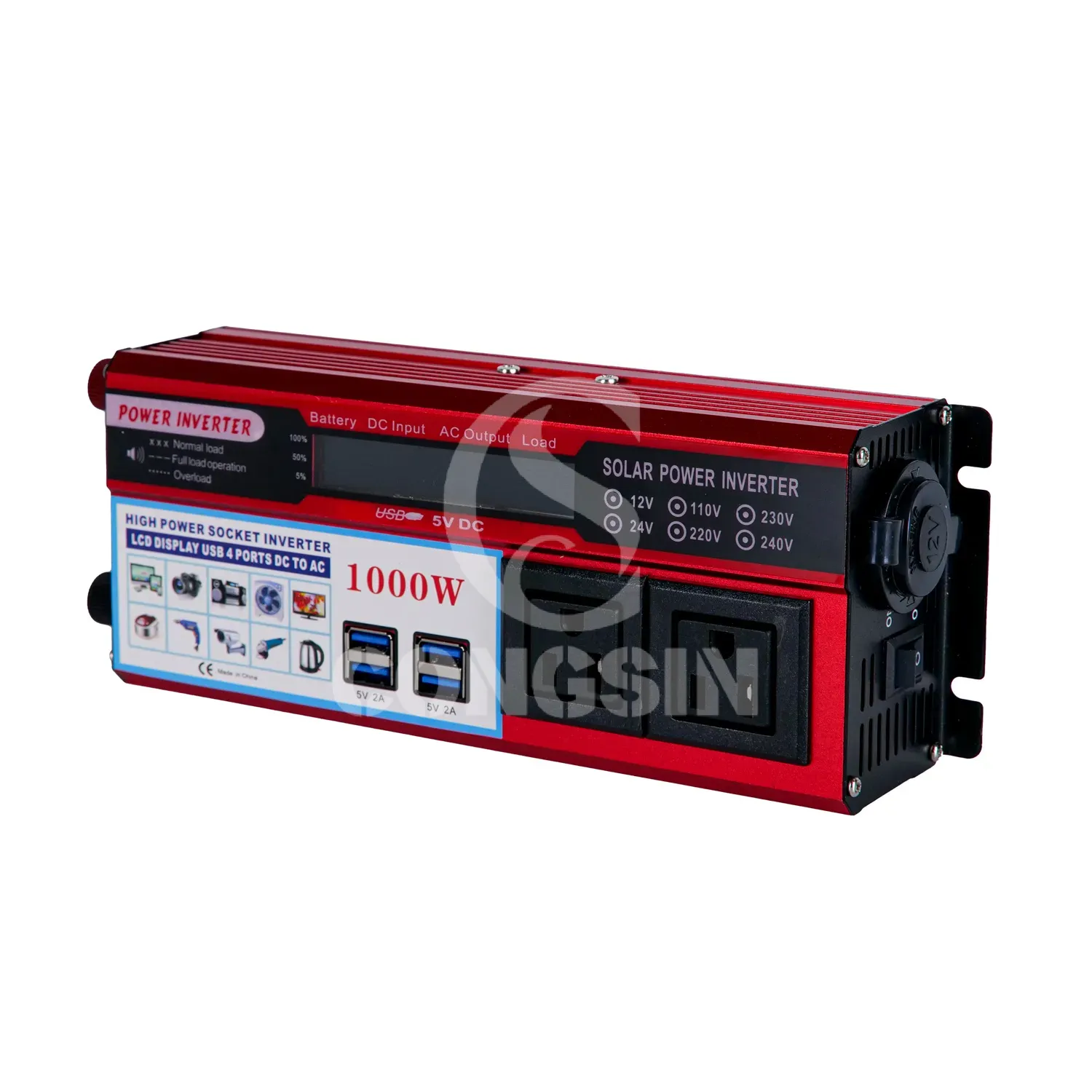
Congsin 1000W modified sine wave inverter with American Sockets and Lcd display portable 12V car RV
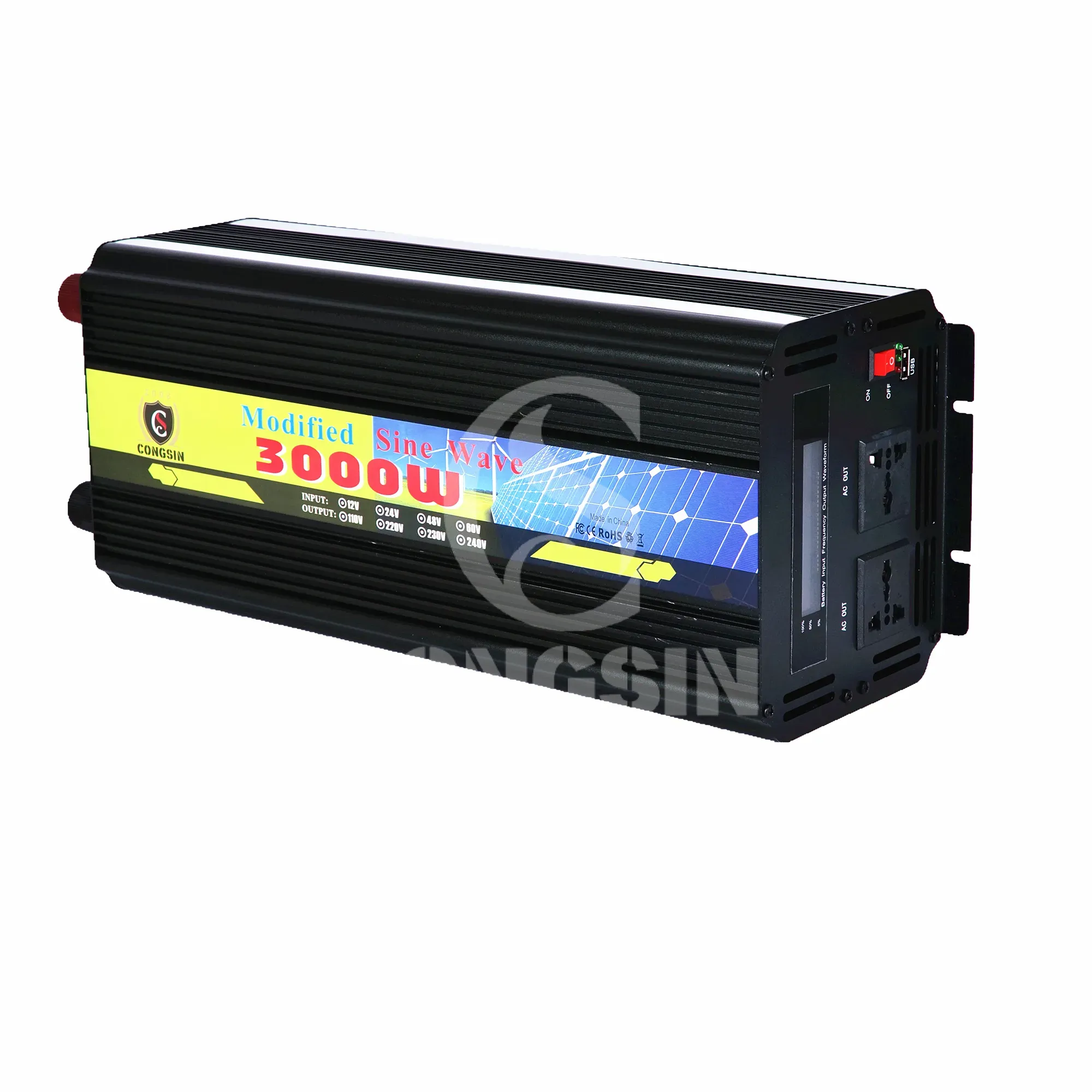
Congsin Full Power 3000W Modified Sine Wave Inverter Peak Power 6000W with LCD Display RV Solar
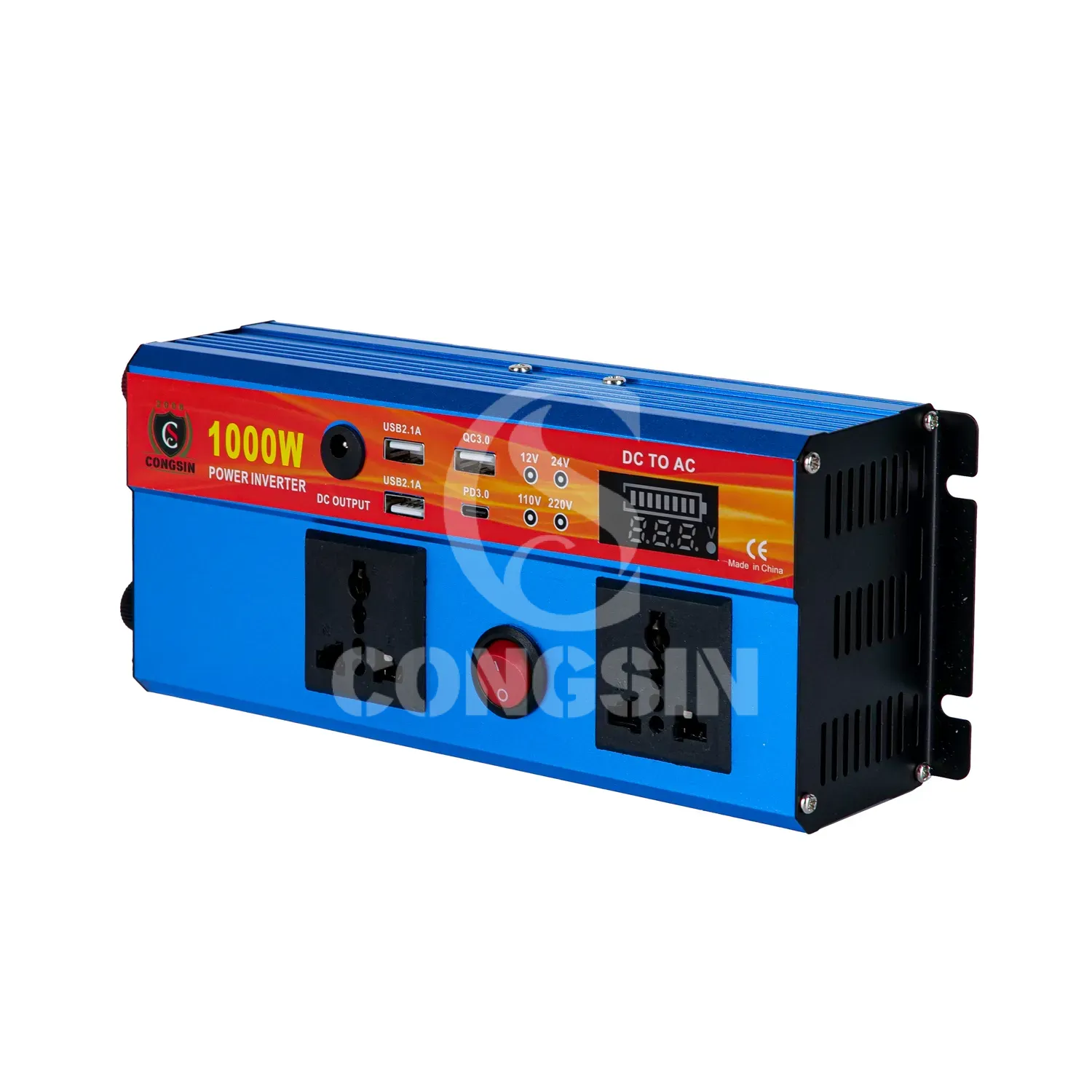
Congsin 1000W modified sine wave inverter with LED display and Type C port car RV power inverter
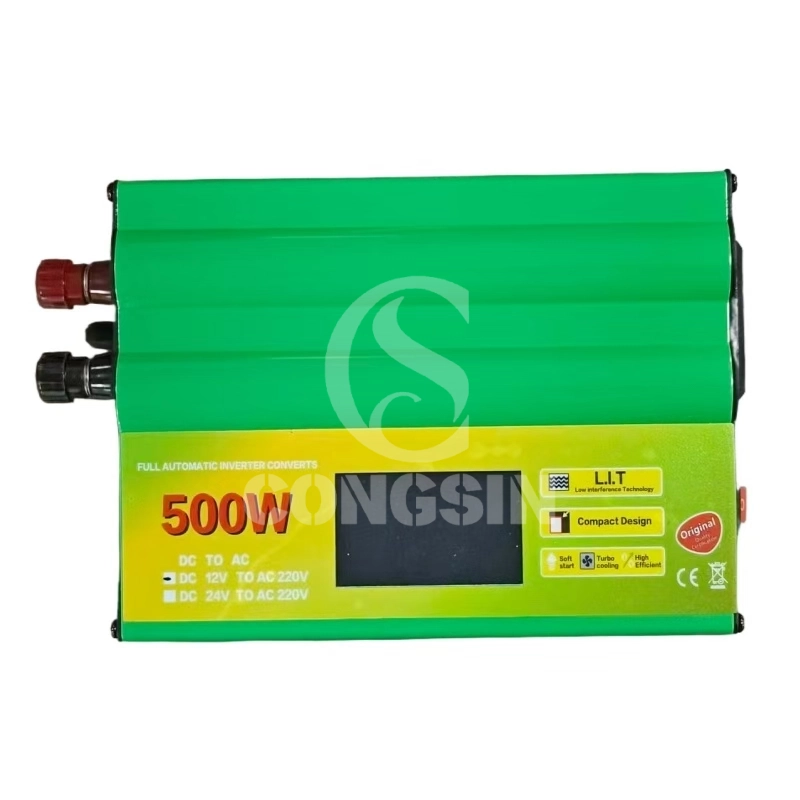
Congsin Modified Sine Wave Inverter 500W 1000W 1500W 12V LED Display Portable for RV Car Solar

CONGSIN is a trusted OEM factory for power inverters, solar charge controllers, and DC converters. Reliable solutions for global B2B buyers.
 High Quality
 7/24 Service
 Guaranteed Warranty
© 2025 Congsin. All Rights Reserved.